 China Martial Arts Supplier & Manufacturer of Sports Protective Products | Tidesports
When designing a fitness facility or sourcing inventory for a sports brand, choosing the right material is critical. The debate of EVA Mats vs Rubber Mats is one of the most common discussions among gym owners, commercial gym flooring suppliers, and procurement managers. Both materials offer distinct advantages in shock absorption, durability, and cost. However, selecting the wrong option can lead to premature wear, safety hazards, and increased maintenance costs.
What are EVA Foam Mats?
Ethylene-vinyl acetate (EVA) is a copolymer material known for its lightweight, elastic, and cushioning properties. If you are sourcing wholesale EVA mats or OEM sports mats, you are likely dealing with high-density closed-cell foam. These are commonly manufactured as interlocking mats that are exceptionally easy to install and replace.
Because of their superior impact-cushioning profiles, they are widely used as martial arts floor mats for BJJ, Judo, and Taekwondo. An Eva Foam Tatami Mat provides the necessary fall protection to prevent injuries during high-impact throws. Additionally, options like High-density Interlocking Exercise Mats are popular for home gyms, yoga studios, and light fitness spaces where floor exercises dominate.
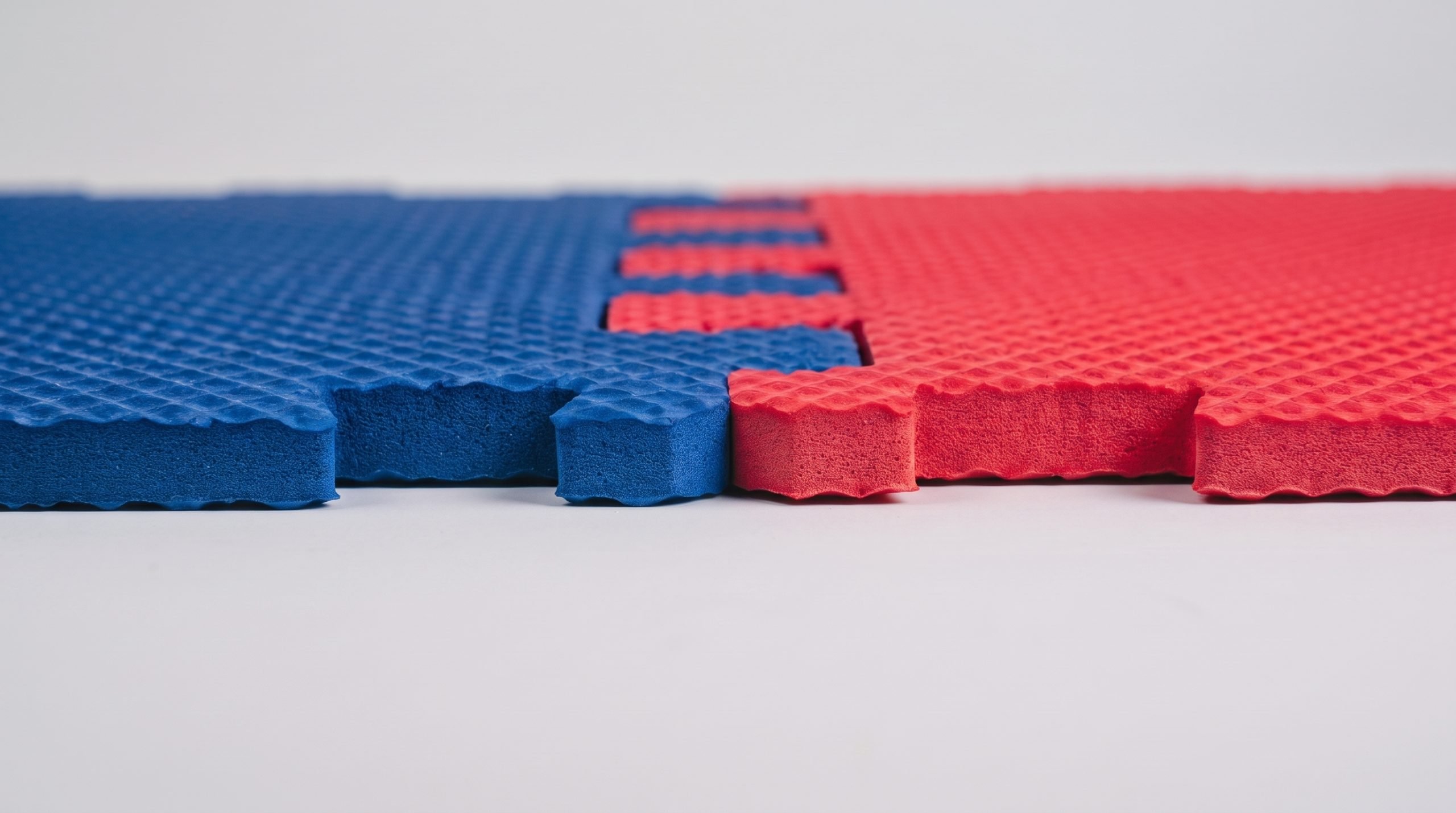
Detailed cross-section of Tidesports EVA mats, showcasing the multi-layer high-density foam structure and seamless interlocking precision.
What is Rubber Gym Flooring?
In contrast, rubber gym flooring is the industry standard for heavy-duty commercial facilities. Made from recycled SBR or virgin EPDM rubber, these mats are designed to withstand extreme impact, heavy weight drops, and constant foot traffic.
For areas dedicated to powerlifting, Olympic lifting, or heavy cardio equipment, a Durable Rubber Gym Floor is essential to protect both the subfloor and the equipment. Furthermore, specialized products like High Density Treadmill Rubber mats absorb high-frequency vibrations and provide stable, anti slip mats configurations that prevent heavy machinery from shifting during operation.
EVA Mats vs Rubber Mats: Key Performance Differences
To help B2B buyers and commercial fitness flooring distributors make informed purchasing decisions, we have compared the technical specifications of both materials below.
| Property | EVA Foam Mats | Rubber Gym Flooring |
|---|---|---|
| Density & Weight | Lightweight, low-to-medium density | Heavyweight, high density |
| Shock Absorption | Excellent for bodyweight impacts and falls | Excellent for heavy equipment and dropping weights |
| Durability & Lifespan | Moderate (can compress under heavy loads) | High (resists punctures and heavy traffic) |
| Water Resistance | Water-resistant, closed-cell structure | High water resistance, easy to sanitize |
| Installation | DIY-friendly interlocking puzzles | Requires adhesive or heavy-duty interlocking joints |
Why Combine EVA Mats vs Rubber Mats?
For facilities that require both the cushioning of foam and the durability of rubber, choosing between EVA Mats vs Rubber Mats doesn’t have to be an all-or-nothing decision. Hybrid flooring products have emerged to fill this market gap. By bonding a heavy-duty rubber top layer to a shock-absorbing EVA foam base, manufacturers create the ultimate fitness flooring.
Sourcing a Pro-grade Dual-layer Interlocking Gym mat allows commercial gyms to offer members a surface that is soft enough for floor work but durable enough to handle dropped dumbbells. This hybrid option simplifies inventory for distributors and provides a versatile solution for multi-purpose fitness centers.
EVA Mats vs Rubber Mats: Which is Better for Your Specific Application?
To maximize your return on investment, you must align the flooring material with the specific activities of the facility.
When to Choose EVA Foam
- Martial Arts and Combat Sports: Where athletes frequently fall or grapple, requiring high-thickness shock absorbing mats.
- Portable and Temporary Setups: Lightweight interlocking tiles are easy to transport, assemble, and store.
- Budget-Conscious Projects: Lower shipping and material costs make wholesale EVA mats highly economical.
When to Choose Rubber
- Free Weight Zones: Where dropped plates would easily puncture or permanently indent foam.
- High-Traffic Commercial Gyms: Places requiring long-term wear resistance under heavy footwear.
- Heavy Equipment Placement: Underneath racks, cages, and treadmills to reduce vibration and noise.
Sourcing Custom Gym Mats from an OEM Gym Flooring Supplier
For B2B buyers, importing sports flooring involves more than choosing a material. Partnering with a reliable gym flooring supplier that offers custom gym mats is key to building a successful private label brand. Customizations can include bespoke density configurations, specific interlocking patterns, custom colors, and embossed brand logos. Working directly with an experienced OEM manufacturer ensures compliance with international safety standards while maintaining competitive wholesale pricing.
Conclusion: Making the Right Choice Between EVA Mats vs Rubber Mats
Ultimately, the decision of EVA Mats vs Rubber Mats depends on the activities your facility hosts and your budget constraints. EVA foam excels in comfort, impact protection for martial arts, and ease of installation. Rubber stands unmatched in durability, heavy-weight resistance, and commercial lifespan. By understanding these differences or opting for a dual-layer hybrid solution, you can ensure your facility is safe, functional, and built to last.
Talk to Tidesports
Need technical support, pricing, or a tailored OEM/ODM quote? Our team can help you match the right product faster.