 China Martial Arts Supplier & Manufacturer of Sports Protective Products | Tidesports
Choosing where your sports equipment is made is no longer only about unit cost. For procurement leaders, Port-Proximity Sports Equipment Manufacturing can materially affect landed cost, lead-time reliability, and how quickly you can respond to promotions, seasonality, and distribution changes. Tidesports helps brands plan production and shipment around practical port workflows—so you can deliver faster without sacrificing consistency.
If you’re currently seeing variable ETAs, unexpected inland trucking charges, or production-to-shipment friction, this buyer-focused approach is designed to tighten execution across the full inbound lane.
Why Port-Proximity Matters for Sports Equipment Buyers
When production is close to the port, your logistics plan becomes simpler and more controllable. That shows up in four buyer outcomes:
- FOB Qingdao lead time reduction: Fewer steps between finished goods and container loading can reduce time uncertainty.
- Inland drayage cost saving: Shorter distances and fewer transfers often reduce trucking time and exception risk.
- Just-in-time inventory turnover: More reliable receipts help you carry less buffer stock while protecting service levels.
- Supply chain agility 2026: Better scheduling supports scenario planning for demand spikes and route changes.
In practice, port-proximity enables you to align production completion, inspection windows, and documentation with the port appointment rhythm—rather than treating shipping as a late-stage problem.
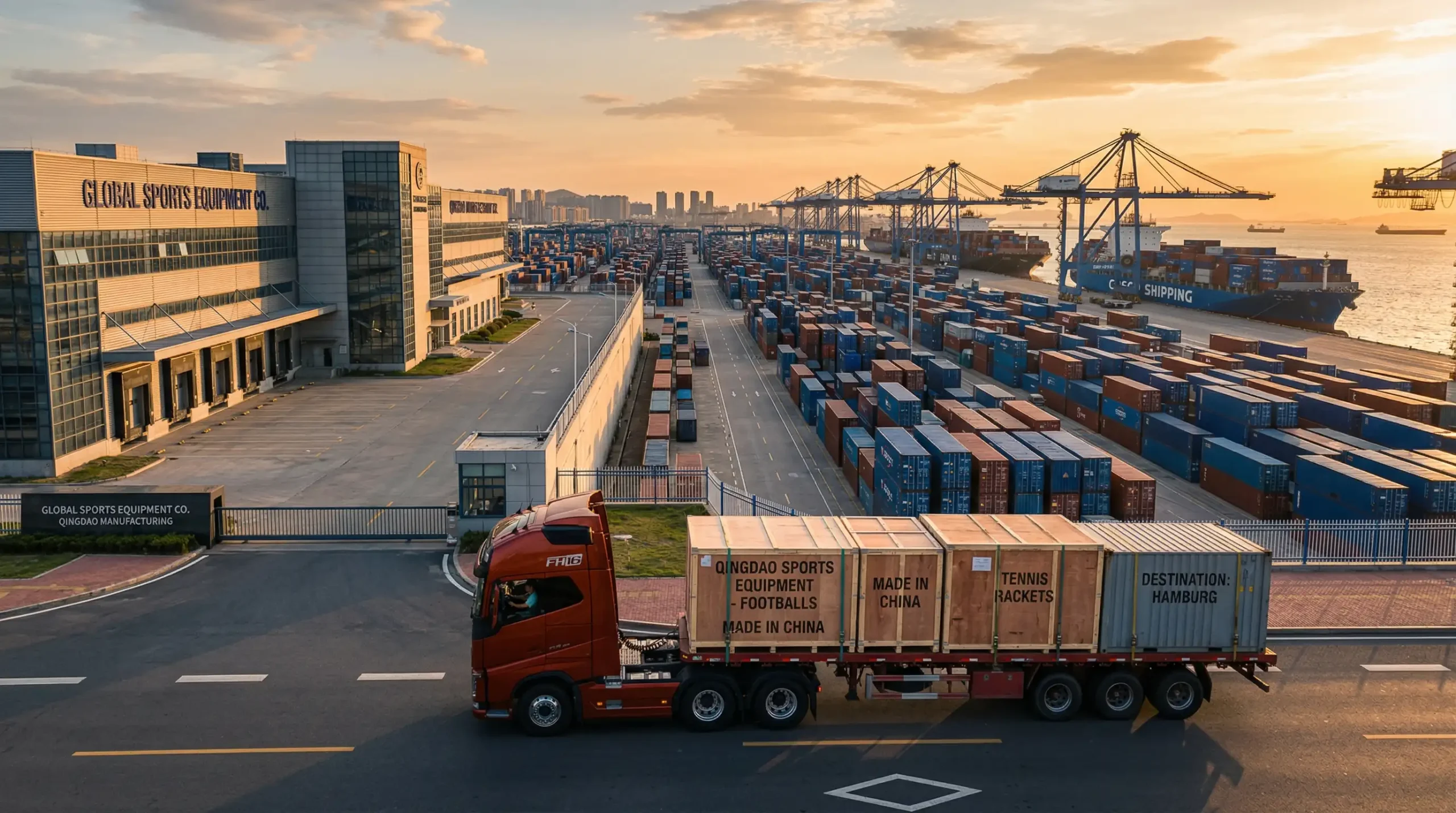
What to Ask About Port of Qingdao Efficiency (Before You Sign)
Even with the right manufacturing location, performance depends on how your supplier coordinates with port procedures. To evaluate Port of Qingdao efficiency readiness, ask for lane-specific answers:
- Cut-off timing: What is the latest production completion time that still supports your booking and loading window?
- Document cadence: When do invoices, packing lists, and COO/required paperwork get finalized?
- Appointment management: How are pickup appointments confirmed, and what happens if the first appointment slips?
- Container readiness: How does the supplier stage goods to prevent late consolidation delays?
Tidesports works with buyers to standardize these handoffs, so teams can forecast inbound receipts with fewer surprises.
Selection checklist: can your supplier “lock the lane”?
Use this short checklist to compare vendors during RFQ stage:
- Lane clarity: Which port is used for your requested Incoterms and routing plan?
- Lead-time ranges: Provide a realistic minimum/typical/maximum schedule, not only an average.
- Exception playbooks: Missed appointment, partial load needs, or documentation holds—who owns resolution?
- Packaging alignment: Cartonization and labeling built for container cube and destination receiving rules.
Freight and Inventory: A Practical Comparison Table
Below is a simplified comparison to illustrate how proximity and planning routines can influence your total logistics performance. Your actual results will depend on product density, cartonization, and destination receiving requirements.
| Logistics Factor | Farther-from-port scenario | Port-proximity scenario | Buyer impact |
|---|---|---|---|
| Inland transit before loading | More distance + more handoffs | Shorter moves + fewer transfers | Inland drayage cost saving and fewer scheduling failures |
| Production-to-container handoff | More variable timing | Planned against port appointment rhythm | FOB Qingdao lead time reduction and better ETA predictability |
| Inventory planning window | Wider safety stock needed | Tighter receipt forecasting | Just-in-time inventory turnover improvement potential |
| Distribution flexibility | Harder to reroute quickly | More stable pre-port timing | Global distribution resilience when lanes change |
| Freight cost modeling | Higher uncertainty adds buffers | More consistent execution inputs | Freight cost optimization strategy becomes easier to manage |
Freight Cost Optimization Strategy: Build a Lane-Based Plan
To reduce total shipping cost (not just the line-item), work from a lane-based freight cost optimization strategy. Start with the realities of how your products ship:
- Cube and cartonization: Confirm packing density and carton dimensions so you don’t pay for empty space.
- Consolidation approach: Decide when you need partial loads vs. waiting for full containers.
- Appointment timing: If you can schedule earlier pickups, you may prevent premium carrier choices.
- Exception tolerance: Plan a response if documentation or port appointments shift.
Because Port-Proximity Sports Equipment Manufacturing can shorten pre-port variability, it often makes your freight model more stable—helping procurement justify tighter buying cadence and reduce over-ordering.
For product teams sourcing mats and protective training goods, Tidesports also supports selection decisions that influence shipping efficiency. For example, if you’re comparing foam mat options, you may see real differences in packing efficiency and handling. See Eva Xpe Foam Mats for guidance on materials used in training environments.
Case-Ready Steps for Global Distribution Resilience
Global distribution resilience isn’t achieved only through inventory—it comes from logistics repeatability. Here’s an approach that procurement teams can implement with Tidesports:
- Standardize documentation and labeling early: Reduce the chance of holds that can break your schedule.
- Align production cycles to shipment windows: Plan output to support container readiness at the port.
- Use consistent packaging parameters: Keep carton weights manageable for receiving teams and optimize container loading.
- Plan for multiple destination constraints: Appointment windows, receiving hours, and port-handling policies differ by region.
When you combine port-focused execution with disciplined packaging and documentation, you strengthen Global distribution resilience—especially during seasonal demand changes.
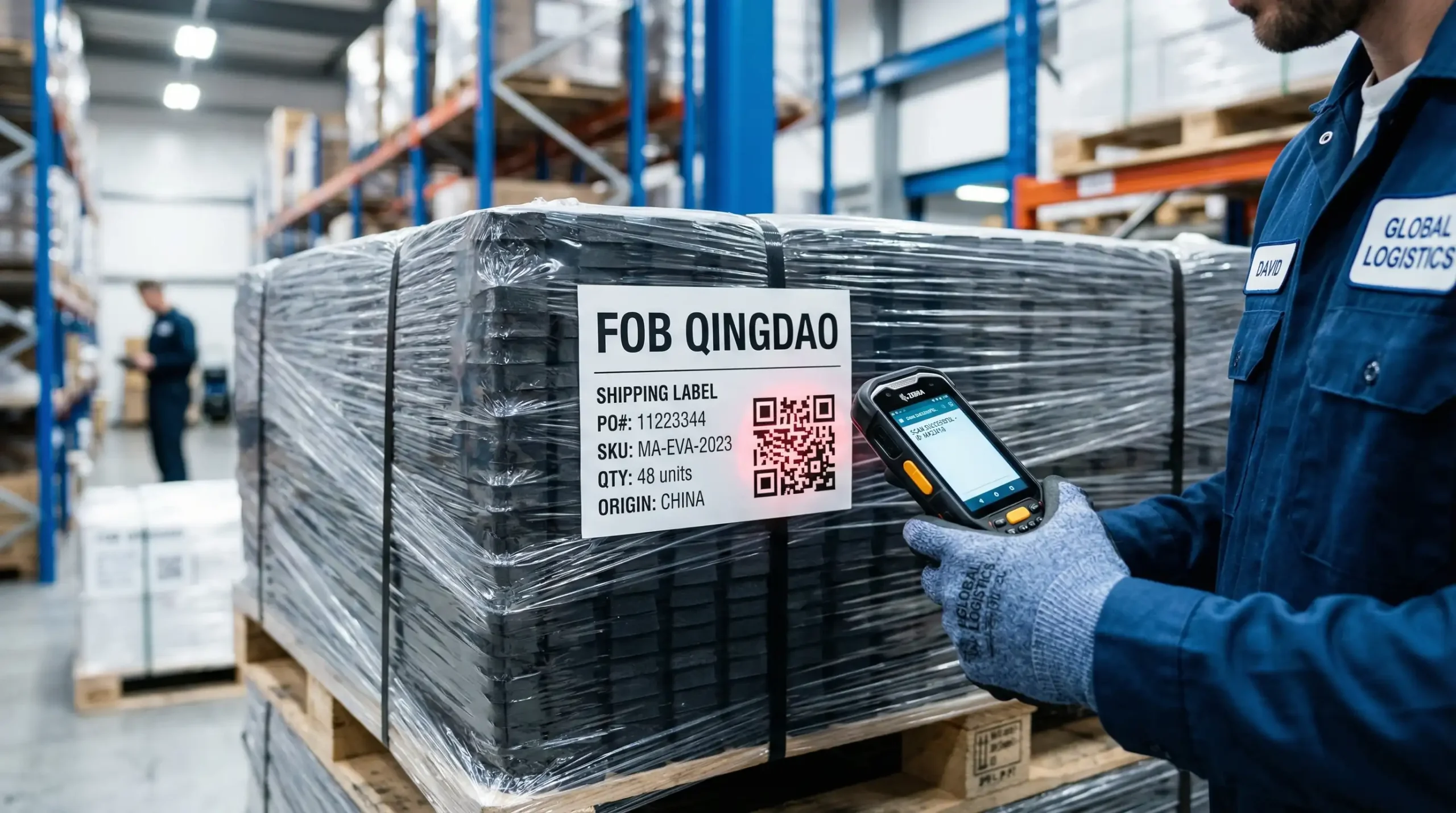
Conclusion: Make Lead Time Predictable, Not Hopeful
Port-Proximity Sports Equipment Manufacturing is a procurement advantage when it’s executed with measurable planning routines. By focusing on FOB Qingdao lead time reduction, inland moves that support Inland drayage cost saving, and processes that improve Just-in-time inventory turnover, Tidesports helps buyers operationalize reliability. The result is stronger lane control, easier freight cost planning, and better readiness for Supply chain agility 2026 priorities—backed by practical coordination around Port of Qingdao efficiency.
If you want to move faster from sourcing to confirmed shipping windows, start by aligning your RFQ with the checklist above and include lane-based timelines. For additional product sourcing context, you can also review Importing Martial Arts Mats to anticipate common shipping and receiving considerations.
FAQ
Q: What does port-proximity mean for sports equipment manufacturing?
A: It means production and logistics are planned close to a major shipping gateway so fewer steps are required before container loading—typically reducing dwell time, improving pickup scheduling, and supporting faster, more predictable replenishment.
Q: How does FOB Qingdao lead time reduction affect my inventory planning?
A: When workflows are coordinated around FOB Qingdao timing, you can shorten the overall planning window and increase the reliability of inbound receipts—supporting tighter safety stock and better Just-in-time inventory turnover targets.
Q: Can port-proximity really lower inland drayage cost saving?
A: Yes. Shorter trucking distances and fewer handoffs reduce the number of scheduled moves and the risk of delays. That directly supports Inland drayage cost saving and stabilizes your freight cost model.
Q: How do I compare two suppliers on supply chain agility 2026 readiness?
A: Ask for lane-specific lead time ranges, cut-off schedules, container utilization approach, and how they manage exceptions (missed appointments, rolling production, partial loads). Look for documented operational routines, not just promises.
Q: What should I include in my RFQ for global distribution resilience?
A: Request packaging details, carton/CBM assumptions, labeling standards, documentation timelines, and the supplier’s plan for destination variability (multiple ports, appointment windows, and regional carrier options).
Image placeholder: Port-side container loading workflow diagram (for procurement and logistics planning).
Talk to Tidesports
Need technical support, pricing, or a tailored OEM/ODM quote? Our team can help you match the right product faster.