 China Martial Arts Supplier & Manufacturer of Sports Protective Products | Tidesports
Sports equipment supply chain efficiency matters when your buyer is judging margin, compliance, and on-time delivery at the same time. For B2B brands like Tidesports, the real advantage is not only low unit cost; it is the ability to move mixed SKUs from packing line to vessel with fewer touches, clearer documents, and a reliable lead-time for B2B buyers.
In practical terms, that means building the shipment around the product mix, the destination market, and the freight window. When the export process is designed well, sports distributors can improve ocean freight cost saving, protect inventory turns, and create a better buying experience for wholesalers and retailers.
Sports Equipment Supply Chain Efficiency Starts at the Origin
The earliest decisions often create the biggest savings. If production, packing, and port handoff are aligned, buyers see faster release times and fewer avoidable costs. That is where the FOB Qingdao port advantage becomes important: it can simplify responsibility transfer, reduce waiting time, and make booking decisions easier for overseas procurement teams.
Another important lever is 7km proximity logistics. When a factory or export team is close to the port, cargo can move with less repositioning and fewer short-haul transfers. For buyers, that often translates into reducing inland drayage expenses and fewer last-minute surprises before vessel cut-off.
Bulk sports gear distribution also works better when packaging is planned for transport, not just for shelf display. Carton size, pallet height, and carton strength all affect how much cargo fits in a container and how safely it arrives. If those details are set before production starts, the shipment is easier to load, check, and release.
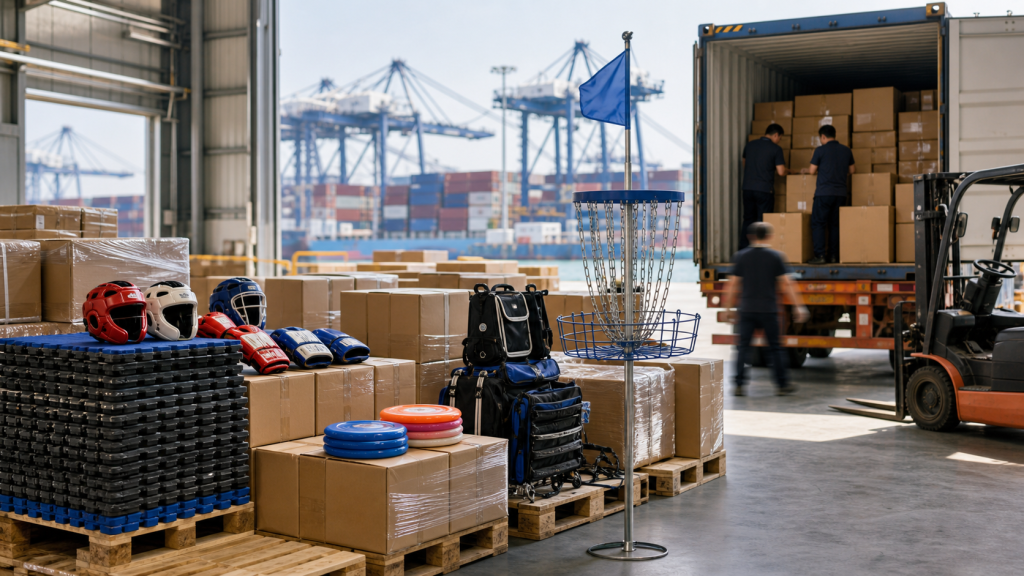
Efficient mixed-SKU container loading helps sports equipment buyers reduce freight cost, improve delivery planning, and protect margins.
Sports equipment supply chain efficiency in mixed-SKU containers
Mixed shipments are common in sports categories. A distributor may combine facility flooring, protective accessories, and outdoor game products in one order. That mix only works well when the supplier can balance weight, volume, and protection requirements without slowing the export workflow.
For example, a buyer sourcing outdoor disc golf programs may pair a durable target with accessories such as Pdga Approved Disc Golf or Factory Direct Pdga Approved products. A fitness buyer may add facility items like Pro-grade Dual-layer Interlocking Gym flooring, while a team-sport distributor may include Football Mouth Guard For protection gear. In each case, container loading optimization is what turns a product list into an efficient shipment.
| Efficiency lever | Operational effect | B2B buyer value |
|---|---|---|
| FOB Qingdao port advantage | Shorter handoff between packing and vessel booking | More predictable shipping windows and fewer delays |
| 7km proximity logistics | Less short-haul trucking and re-handling | Lower inland drayage expenses |
| Container loading optimization | Better cube usage and weight balance | Lower freight cost per unit |
| Streamlined export workflows | Earlier document alignment and packing verification | Fewer release issues and better lead-time control |
| Reliable shipping from China | Consistent booking and handoff discipline | Stronger reorder confidence for buyers |
How Sports Equipment Supply Chain Efficiency Cuts Cost and Risk
Cost reduction is not only about negotiating freight. It also comes from removing waste in the process. The best global B2B logistics strategies combine production planning, forecast visibility, and pre-shipment checks so the supplier can ship the right quantity, in the right packaging, with the right documents.
That is especially important for international trade compliance. Commercial invoices, packing lists, product descriptions, and country-specific labeling all need to match the actual cargo. When paperwork is aligned before the container closes, the shipment is less likely to face inspection delays or post-arrival corrections.
Buyers should also ask for a practical load plan before they approve production. A clear load plan shows how many cartons fit, whether pallets are required, and whether fragile or high-value goods need extra protection. That transparency makes reliable lead-time for B2B buyers more realistic because the freight schedule is built on real cargo dimensions rather than assumptions.
- Request final carton dimensions before confirming the booking.
- Use one master packing plan for every SKU in the order.
- Confirm labels, barcodes, and country requirements before production ends.
- Reserve freight with enough buffer for customs and port cut-offs.
- Ask whether the supplier offers streamlined export workflows from packing to dispatch.
When buyers order in bulk, these steps matter even more. Bulk sports gear distribution can quickly become inefficient if cartons are oversized, documents are inconsistent, or products are split across too many truck moves. The result is higher handling cost, weaker container utilization, and less reliable delivery planning.
At Tidesports, the goal is to make sports equipment supply chain efficiency visible to the buyer. That means better freight planning, better packing discipline, and better communication from inquiry through shipment release. For importers, that is how reliable shipping from China becomes a practical competitive advantage rather than just a promise.
Conclusion: Sports Equipment Supply Chain Efficiency Drives Better Margins
Sports equipment supply chain efficiency is a margin strategy, not just a logistics task. Buyers who focus on port proximity, container loading optimization, compliance readiness, and predictable lead-times usually get lower total landed cost and fewer service problems. If your next order needs reliable shipping from China, Tidesports can help you align product mix, export workflow, and freight planning so the shipment arrives with fewer delays and more control.
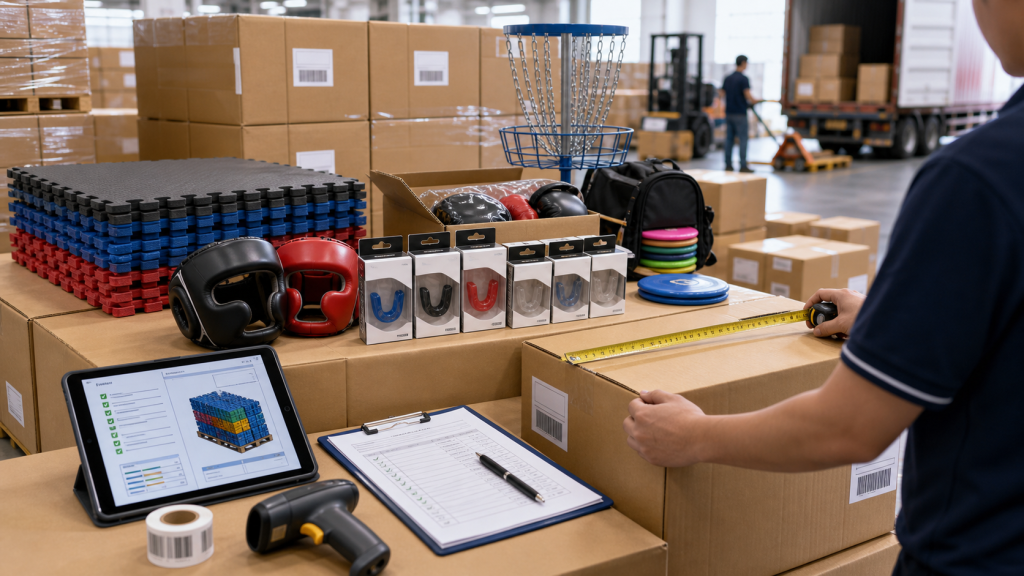
Pre-shipment packing checks help sports equipment buyers confirm carton dimensions, mixed-SKU loading plans, labels, and export readiness before container loading.
FAQ
What is the fastest way to improve sports equipment supply chain efficiency?
The fastest gains usually come from better carton planning, cleaner product documentation, and a freight strategy that is set before production ends.
Does FOB Qingdao help with ocean freight cost saving?
Yes. FOB Qingdao can improve handoff clarity and support better vessel planning, which often helps buyers avoid avoidable inland and detention costs.
Why does container loading optimization matter for sports products?
Sports products vary widely in size and density. Better loading improves cube usage, protects goods in transit, and lowers freight cost per unit.
How do buyers verify reliable lead-time for B2B buyers?
Ask for a production schedule, a packing timeline, and a shipping window with built-in buffer for customs and port cut-offs. That is the most practical way to validate timing.
Talk to Tidesports
Need technical support, pricing, or a tailored OEM/ODM quote? Our team can help you match the right product faster.