 China Martial Arts Supplier & Manufacturer of Sports Protective Products | Tidesports
Yoga studio flooring is one of those decisions that looks cosmetic until twenty students are flowing through a vinyasa on bare concrete. This September, as studios publish autumn timetables, flooring is moving up the buying list for owners and fit-out contractors. The floor decides joint comfort, grip, noise and how many back-to-back classes a room can host. This guide explains which materials work in a studio, how thickness and density change the feel underfoot, and how to source a full flooring programme from a Qingdao OEM/ODM factory.
Why Yoga Studio Flooring Decides Class Quality
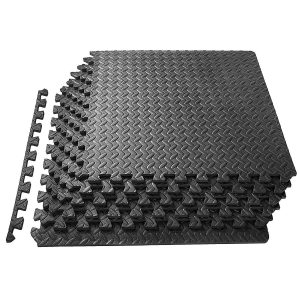
Hardwood and tile look beautiful in a reception area but are unforgiving under a mat. A studio floor has to absorb landing forces, hold grip when hands and feet are sweaty, and mute the thump of feet so the class below stays peaceful. Bare concrete is cold and slippery; thin vinyl offers almost no cushioning. Interlocking EVA tiles solve those three problems at once: soft, quiet and easy to re-lay when a studio changes layout. That flexibility is why foam flooring keeps growing as an anchor product for fitness retailers, at a time when global participation in yoga and pilates keeps climbing. For teachers who prefer a roll-up option in smaller rooms, our foam exercise mats are a natural companion to a tiled main floor.
Yoga Studio Flooring Options: EVA Tiles, Rubber Rolls and Dual-Layer
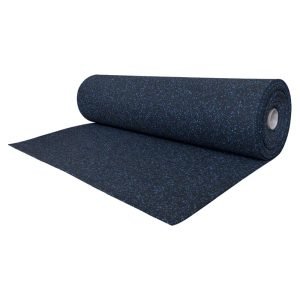
Studio buyers always ask which material belongs under which class. Interlocking EVA foam tiles are the default for yoga, pilates, barre and kids’ classes: warm, quiet and forgiving under bodyweight. Our 24×24 inch interlocking EVA foam mats click together without adhesive and lift for cleaning or re-laying when a studio reconfigures. Rubber is the answer wherever equipment lives: a rubber gym floor mat resists indentation under reformers and dumbbell racks, while treadmill rubber mats protect cardio zones.
Dual-layer construction splits the difference, pairing a vulcanised rubber wear surface with an EVA shock base. A dual-layer rubber-top EVA gym tile takes weight-room traffic without the cold feel of solid rubber, which is why it is the fastest-growing line in yoga studio flooring. Our EVA foam mats vs rubber mats comparison covers the trade-offs.
| Material | Best Studio Zone | Feel Underfoot | Equipment Load | Cost Band |
|---|---|---|---|---|
| Interlocking EVA tiles | Yoga, pilates, barre, kids | Soft, warm, quiet | Bodyweight only | $ |
| Rubber rolls | Weights, cardio, reformer bays | Firm and grippy | Heavy equipment | $$ |
| Dual-layer rubber-top EVA | Hybrid and HIIT studios | Firm surface, cushioned base | Moderate weights | $$$ |
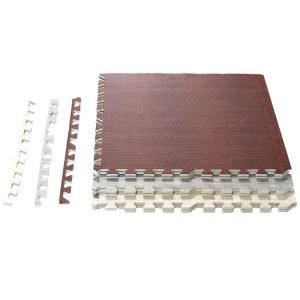
| Wood-grain EVA tiles | Reception, boutique, livestream | Warm with a timber look | Bodyweight only | $$ |
Thickness, Density and Slip Resistance for Studio Floors
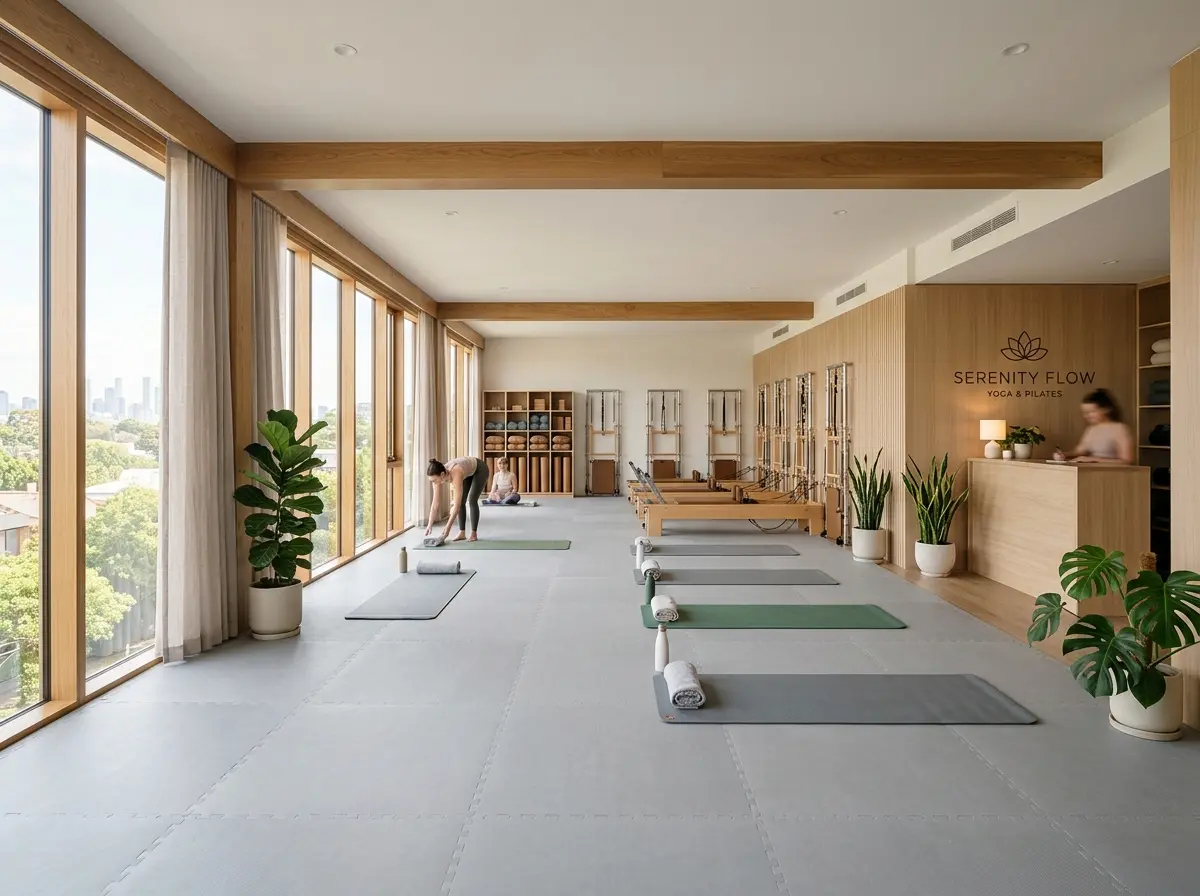
Thickness is the first spec buyers get wrong. For yoga studio flooring, 12-15 mm gives enough cushion for kneeling and seated poses without making balances feel unstable. Move to 20 mm for HIIT and kids’ classes, and 25 mm or a dual-layer tile where equipment shares the room. Density matters too: two 20 mm tiles can differ by a third in foam content, and the lighter one mushrooms at the seams in a season. Our note on why high-density EVA mats save more than cheap alternatives shows the return maths; the tatami mat thickness guide applies the same logic to mat sports.
Grip is the quiet spec: ask for a matte, lightly textured surface and test it wet, not dry, because sweat changes everything. Closed-cell EVA does not absorb moisture, so it stays consistent through a full timetable.
Design Details Buyers Forget: Colour, Edges, Sound and Hygiene
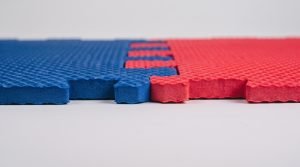
Once the material is settled, the details decide whether yoga studio flooring looks designed or improvised. Colour-coded zones are the fastest win: a two-tone layout separates the mat area from the shoe-change zone and hides scuff marks better than one dark colour. Edge pieces finish the perimeter so tiles cannot slide, and a stock of spares lets a studio replace one damaged tile without a full pallet order. For boutique and livestream rooms, wood grain EVA floor tiles deliver a timber look with foam comfort and far less maintenance. Family studios often add EVA puzzle mats for a kids’ corner, while martial arts mats let the same room host taekwondo or judo classes after hours.
What to Check Before Ordering Studio Flooring Wholesale
Before you wire a deposit, run every candidate factory through the same five-point check:
- Density and tolerance: demand the kg/m³ figure and a written thickness tolerance.
- Interlock precision: click samples together and inspect seam gaps across a 3×3 m layout.
- Colour consistency: request tiles from one production batch and a wet-clean test.
- OEM service: printed logos, custom edge colours, retail-ready cartons and barcode labels.
- Compliance and samples: ask for test documents and physical samples before mass production.
Freight is its own line item. Because tiles nest tightly, one container can floor several studios, and our container loading guide for mat imports shows how cost per square metre drops when the cube is planned well. If you also supply home users, the home gym flooring sourcing guide explains how to build a retail range from the same production line. Confirm FOB Qingdao pricing and a carton configuration that matches your pallet norms.
FAQs on Yoga and Pilates Studio Flooring
What is the best yoga studio flooring?
Closed-cell EVA interlocking tiles in 12-15 mm are the best all-round choice: warm, quiet, easy to clean and simple to re-lay. Rubber rolls suit equipment bays.
How thick should studio flooring be under pilates reformers?
Twenty millimetres of high-density foam is a good baseline. Reformers and benches concentrate load on small feet, so a denser or dual-layer rubber-top tile prevents permanent dents.
Can foam tiles handle weights and cardio equipment?
Standard foam is fine under bikes and treadmills with a protective pad. For dumbbells and racks, choose a rubber-top dual-layer tile or 25 mm high-density foam.
What is the MOQ for custom studio flooring?
As a Qingdao OEM/ODM factory we start at 500-1000 square metres per design and colour, with custom logos, private-label packaging and mixed loads available.
Send Your Inquiry for Wholesale Yoga Studio Flooring
Tide Sports is a Qingdao OEM/ODM manufacturer of EVA mats, rubber flooring and combat sports gear. Send your thickness, density, colour and MOQ for a factory-direct quote with free samples.
Send Your Inquiry Now → Browse Our Mats
Free samples · OEM/ODM · Factory-direct FOB Qingdao · Reply within 24 hours